This piece emerges from conceptual meanings of space and movement. Building on her previous work in 2023, where Minsu delved into Najeonchilgi, or mother of pearl, creating seemingly flat works in three dimensions, she embarked on an exploration of space and dynamism for the first time. This current work can be viewed as a continuation of that exploration, albeit within a 3D digital realm. Envisioning the geometric shapes and movements of a dancer on stage, the piece abstracts the dynamism inherent in their motions. While earlier work abstracted gestures evocative of grand leaps, this piece evokes the transformative abstraction of a dancer, reminiscent of the fluidity of water.
Material Memories
ALMA SCHÄFF
BIANCA PINA
MINSU KANG
Click button for 3D view!
Move your mouse over the piece to zoom!
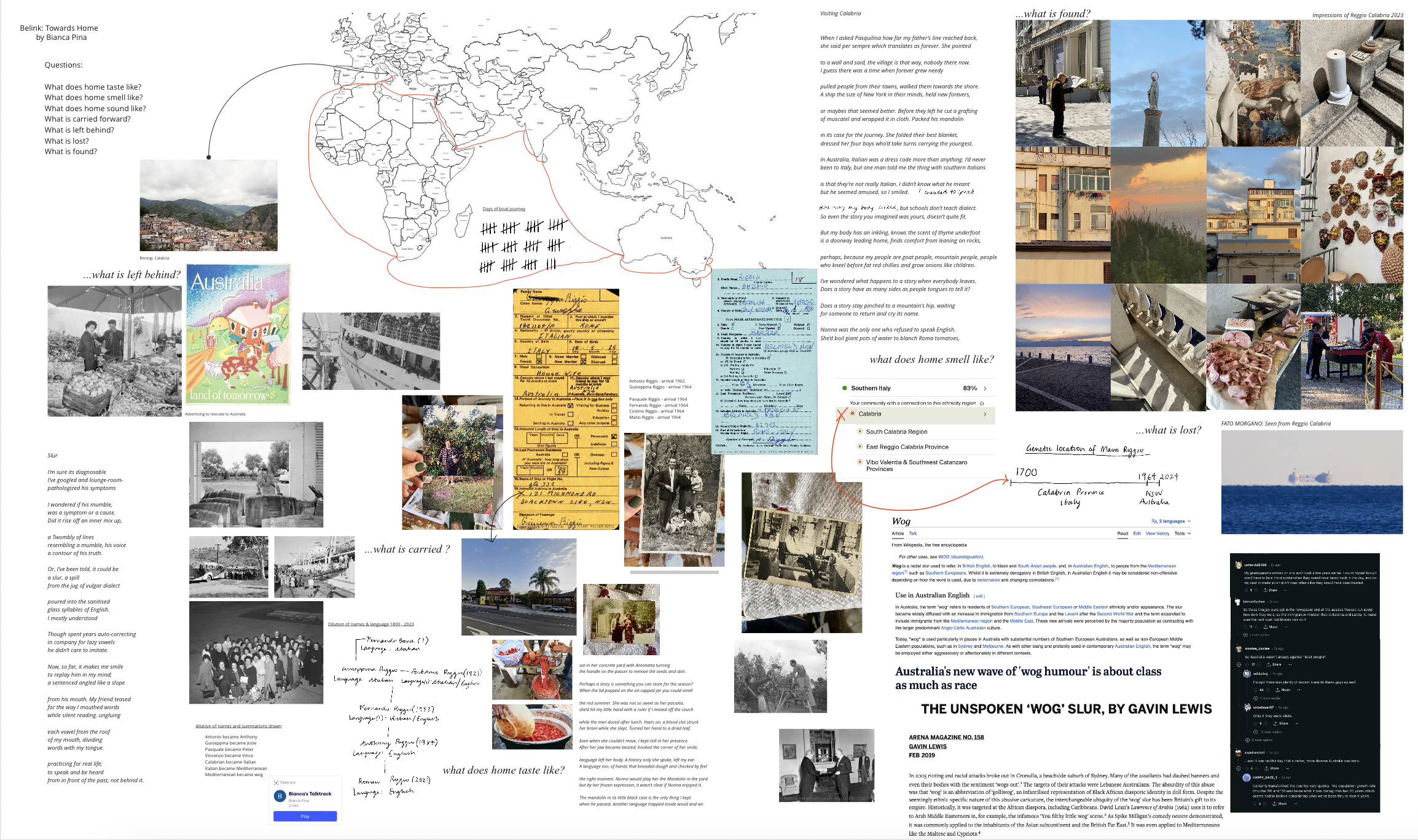
'Towards Home' is a collection of materials through which Bianca Pina has pieced together the stories of her family's journey from Calabria to Australia. She lays out boat routes, travel documentations and family photos, completed by her writings that reveal her personal connections to a home she never knew.
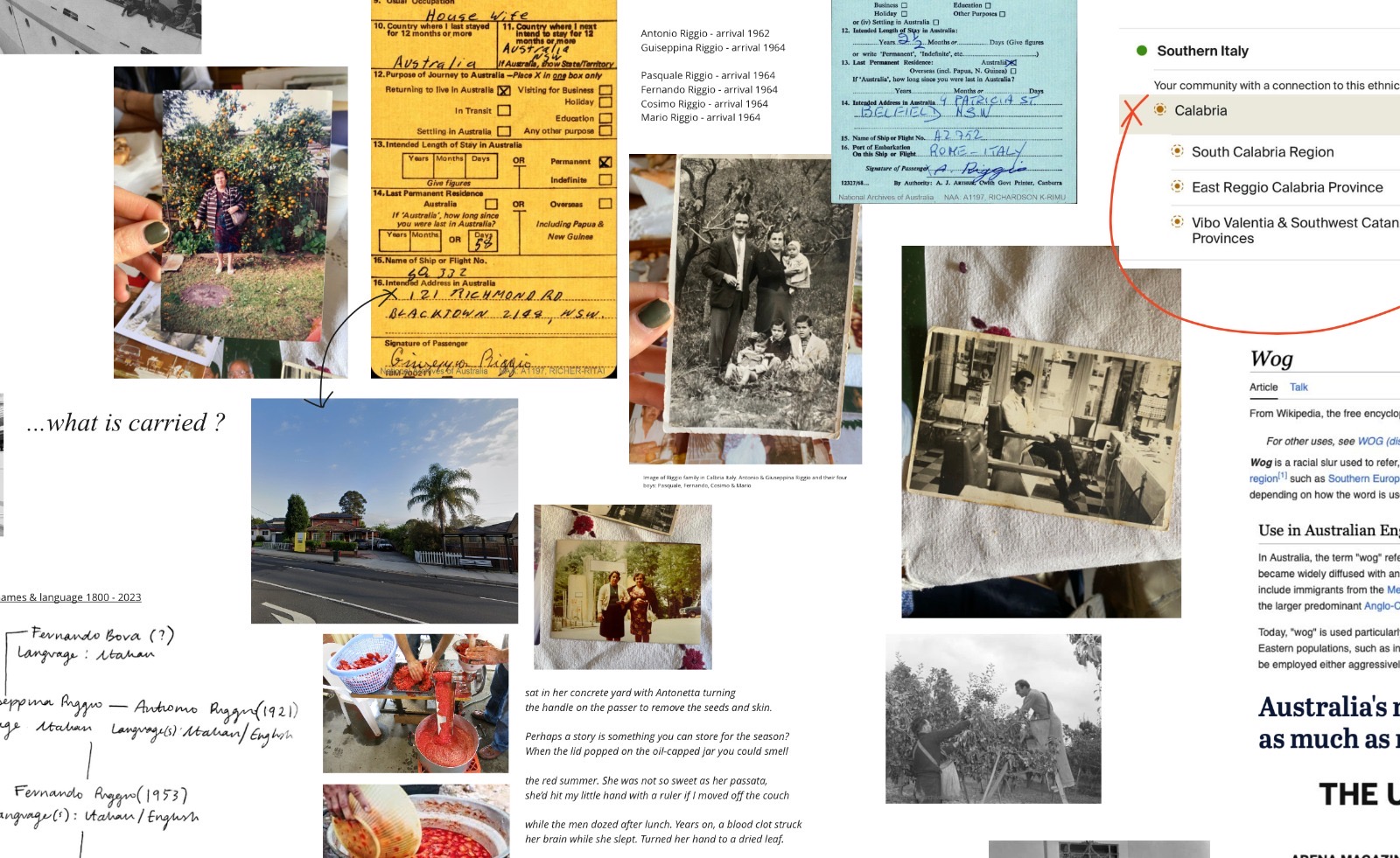
Bianca has been working on the included pieces of writing foe some time now. She explains that it is auto-fictional in some ways, as like most immigrant offspring, there is a degree of filling in the blanks when it comes to one's family history and story. There has been much written about the Third Culture experience. The effects of a culture transplanted to a different hemisphere, from one climate to another, the willingness to change or the struggle to preserve the tradition. The feeling of isolation, deprivation and being separate from both cultures. Never at home.
Bianca's grandmother was a staunch woman who had no interest in being Anglofied, her grandfather on the other hand (while remaining very much cliche Italian) made more effort to speak and encourage English. Bianca thinks he saw it as aspirational, a level-up. Perhaps as he worked outside of the house (unlike her grandmother) he had to make more efforts to assimilate. Bianca writes "Being from a part of Italy that I have heard northern Italians refer to as the Third World, a place where crime is high and the culture has been so historically mixed with other Mediterranean cultures (Greek, African etc.) also creates nuance. While being born Italian/ Australian, I didn’t visit Calabria (my father’s birthplace) until I was 36. I never felt squarely Italian, and most definitely didn’t feel Australian either."
Visiting Calabria
One of the prompts from the belink platform was “What does home smell like?”, which for Bianca emoted an immediate and visceral sensation. Tomatoes stored for the season and picked from the rows of jars stored in her Nonna's larder were one of the predominant smells of her childhood; the smell of eucalyptus, the salt spray of the Pacific Ocean and the towering rocks of the east coast of Australia, all ties to memories that she registers distinctly as home - knowing quite well that none of them are/were truly her home.
Bianca grew up in an area called Blacktown in Sydney, which is the land of the Darug Tribe. She thanks that land and its original custodians for the soil her grandmother toiled to grow tomatoes and make passata.
ALMA SCHÄFF
TUBE
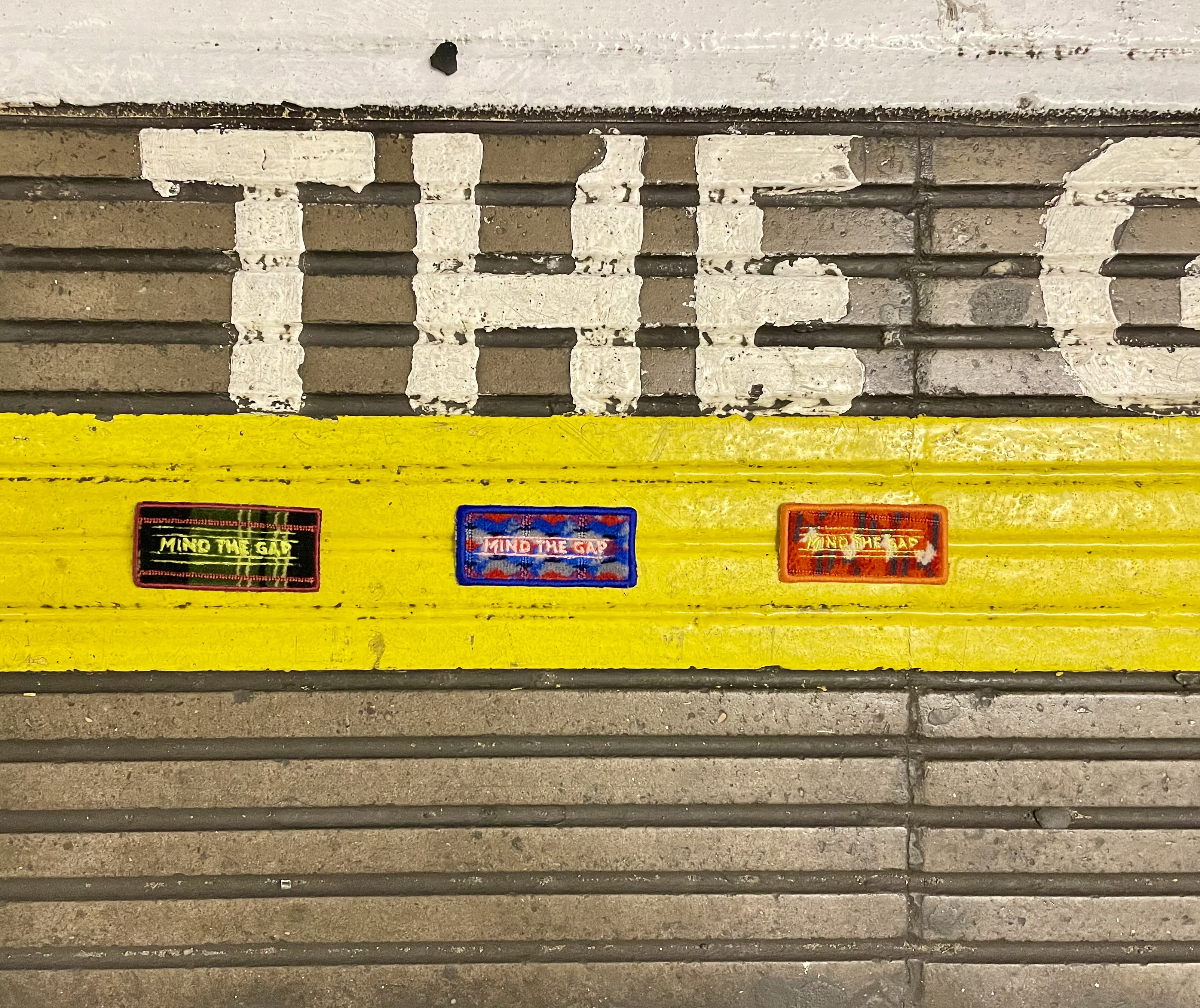
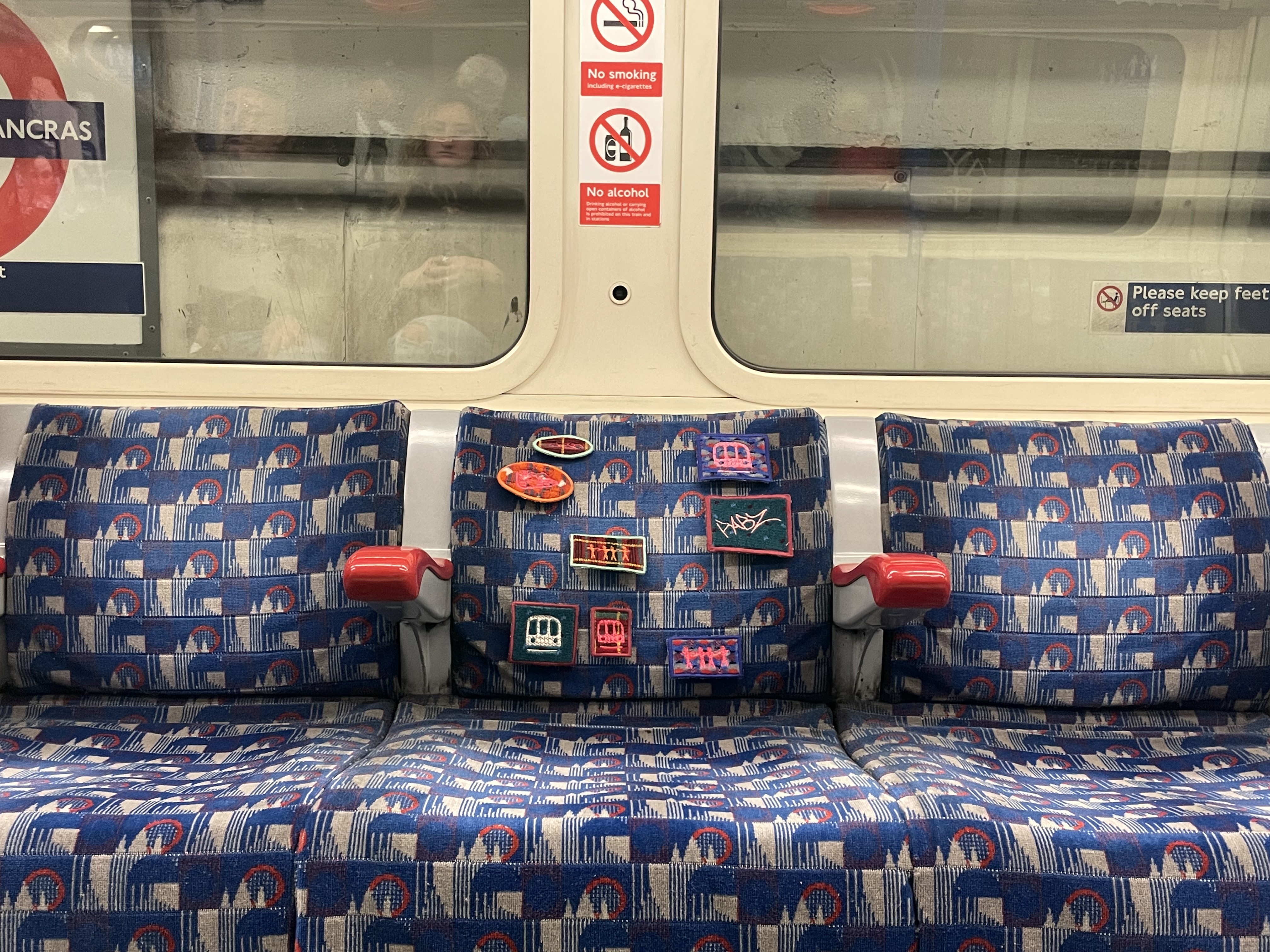
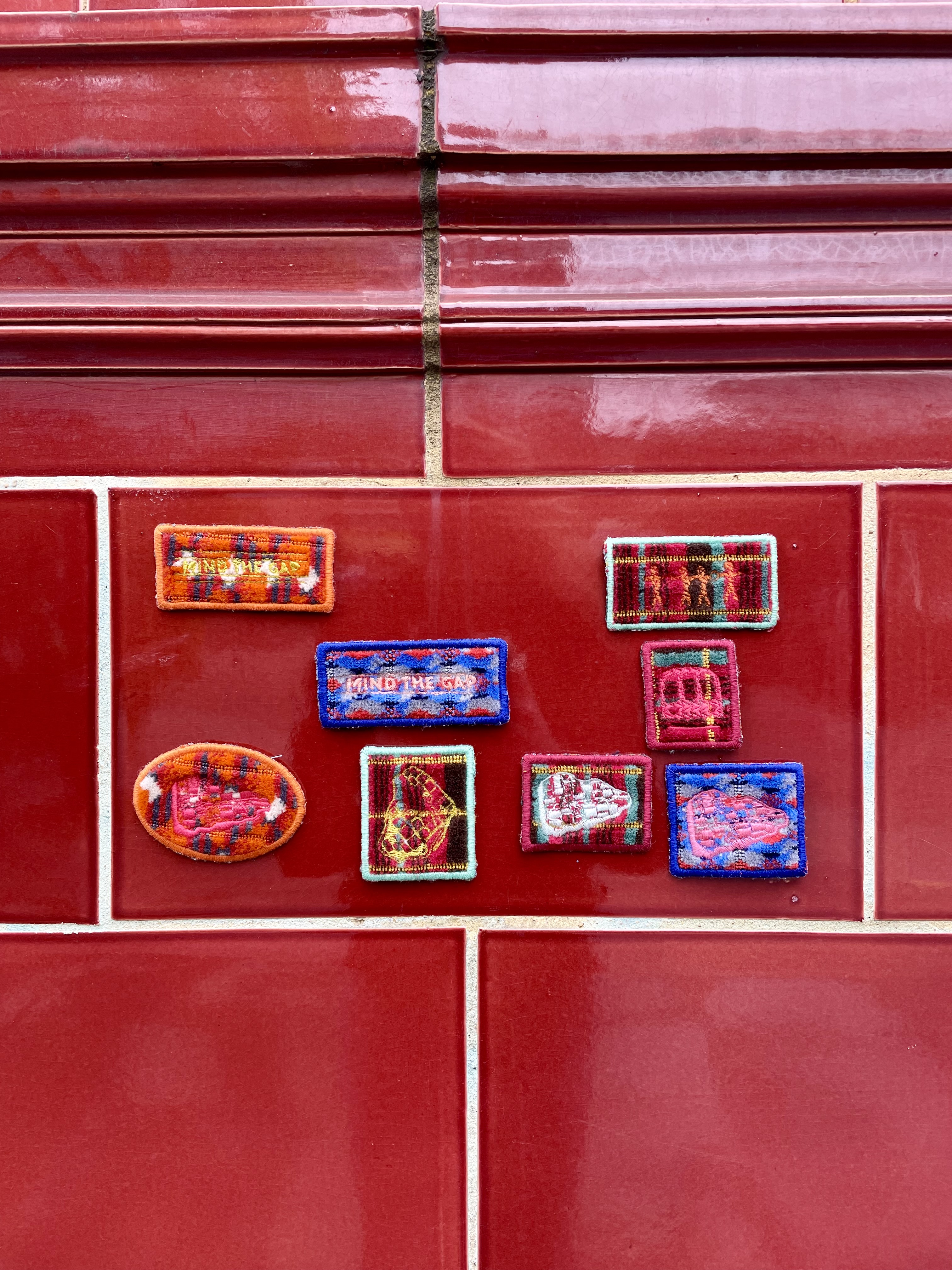
In Alma's exploration of the London Underground, she delved into its transit system, the design principles governing its infrastructure, and the thoughtful selection of materials in its construction. Within her work, she cuts and covers the time spent commuting daily, alluding to the early methods used in building the London Underground tunnels and what remains as our main mode of transport today. The concept of time emerges as a recurring theme in the idea of souvenirs. Through a series of drawings, sketches and material tests, Alma captured the surface lines, deep-level links and encounters within the confines of the tube. The underground becomes more than an extension of travel, it unravels a schematic map of memories stitched in undefined zones.
How does MATERIAL envoke MEMORY?

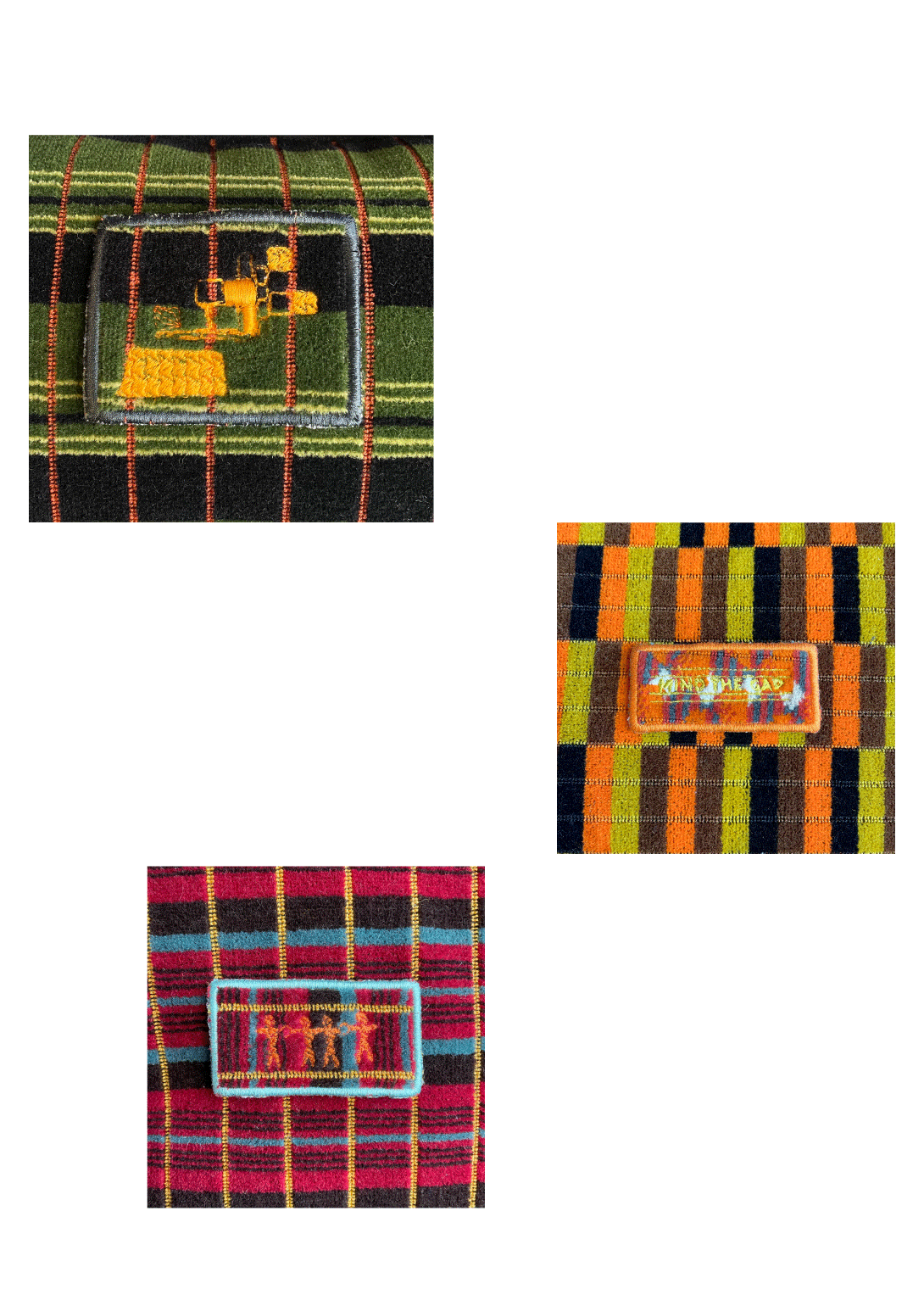
The artist collected pieces of deadstock seat fabrics provided by the Transport For London (TFL). She experimented with the fabric, called moquette, in combination with embroidery which reflects the structural elements of time and the journey taken. She intertwines memory and material. The foundation of the works lies in traces of the daily lives lived through the London Underground, shown through capturing the 'markings' of writings or graffiti that one can see painted or scratched onto the windows and seats. Alma was drawn to these results of impulsiveness and spontaneity by commuters who were compelled to leave messages or just scribble around to leave a mark. This touches everyone who commutes through the city - the ones who read and sleep, listen to music, or the ones jotting down notes.
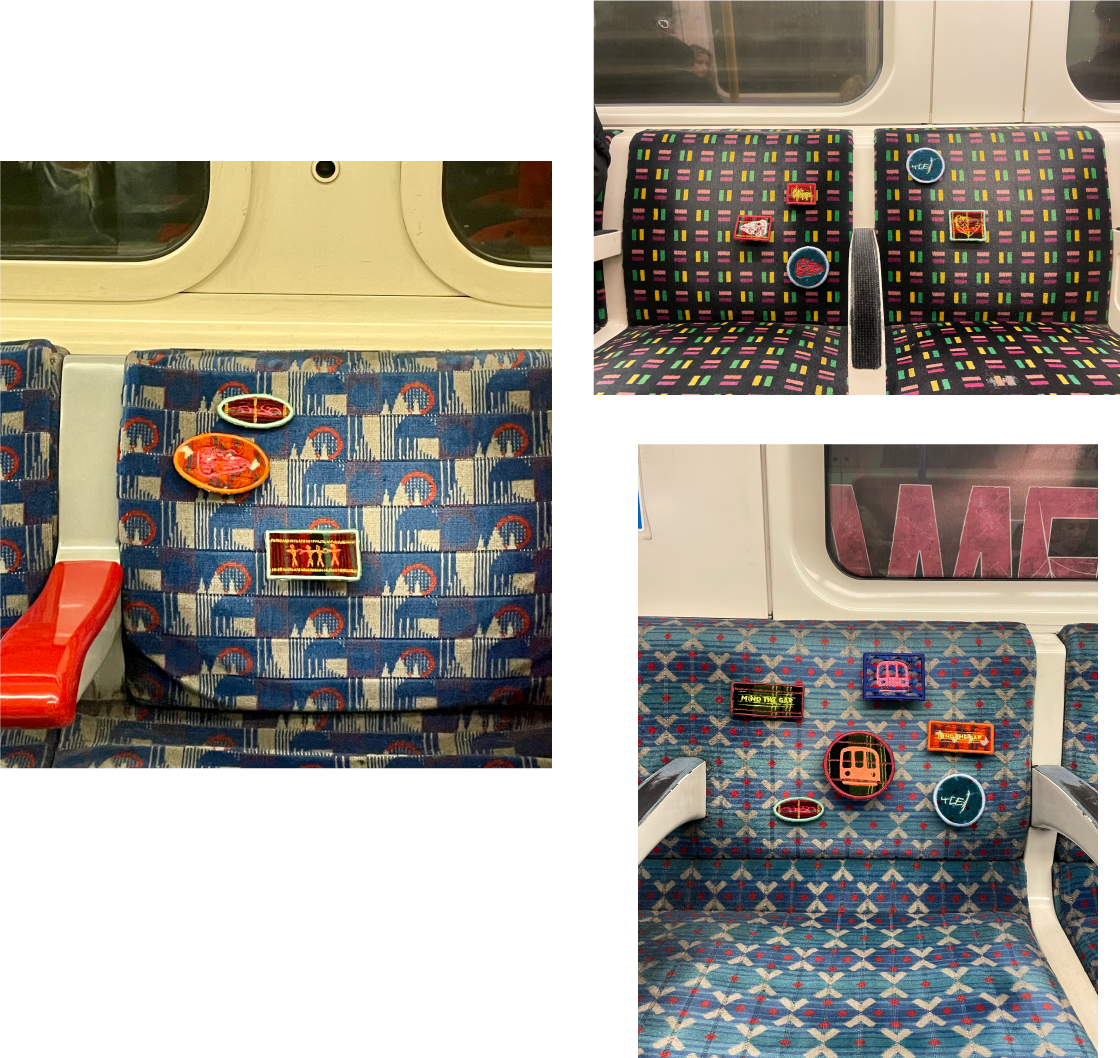
These mundane yet familiar moments depict a representation of movement in daily life. It's a personal souvenir from time and space.